AI Income
How to Write an Ebook With AI in 2026 Without Making Spam: A Step-by-Step Workflow
A step-by-step workflow for writing a useful ebook with AI help, including validation, outlining, fact-checking, design, KDP disclosure rules and Google-safe publishing.
By Md Mahfuj HossainPublished 5 min read

Quick answer: Use AI as an assistant to structure and draft, but supply the expertise, facts and examples yourself, verify every claim, and disclose AI use where a platform requires it. Amazon KDP requires creators to disclose AI-generated text, images or translations and has been reported to cap new titles at three a day. Google's policies target mass-produced thin content, not AI assistance. A good ebook solves one specific problem and includes real samples, templates and honest limits.
Key takeaways
- Validate before you write. Check demand and competing titles.
- Expertise first, AI second. AI cannot supply experience you do not have.
- Verify every number, quote and link.
- Disclose where required and avoid mass-producing books.
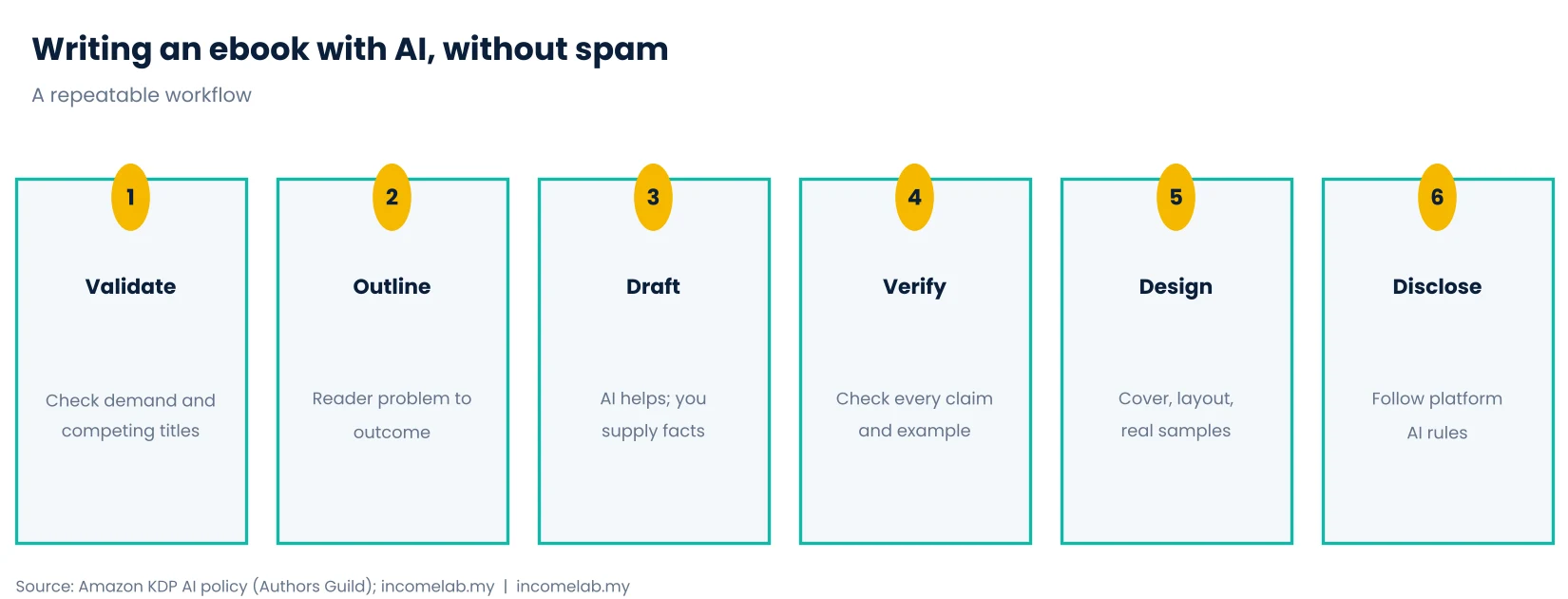
Figure 1. A six-step workflow. Skipping step 4 (verify) is the most common cause of embarrassing errors.
Step 1: Validate the idea
Search the platforms where you will sell. Look at competing titles, reviews and what readers complain about. A narrow, specific promise ("a 30-day plan for X") beats a broad topic. Our side hustle comparison shows how crowded broad topics can be.
Step 2: Outline from the reader's problem
Write a one-sentence promise: "After this book, the reader can [do X] in [time] without [pain]." Then outline chapters as steps. Ask AI to critique the outline, but decide the structure yourself.
Step 3: Draft with AI, using your facts
| Task | AI can help | You must supply |
|---|---|---|
| Structure | Chapter outlines, headings | Final order |
| First drafts | Rough text from your notes | Facts, examples, voice |
| Editing | Clarity, grammar, tone | Final judgement |
| Summaries | Chapter recaps, key takeaways | Accuracy |
| Templates | Draft checklists | Real-world testing |
Step 4: Verify everything
| Check | How |
|---|---|
| Statistics | Find the primary source; note date |
| Quotes and names | Confirm they exist |
| Links | Open each one |
| Legal or medical claims | Remove or cite and add a disclaimer |
| Examples | Label hypothetical examples clearly as hypothetical |
A fabricated example presented as real is a trust and legal problem. Label any invented case "hypothetical" and never present invented results or testimonials as real.
Step 5: Design and format
- A clear cover and consistent typography.
- Short paragraphs, headings and callouts.
- At least 3 original figures or tables; this book's reader should be able to use it.
- A sample chapter and table of contents on the sales page.
Step 6: Publish and disclose
| Platform | Notes |
|---|---|
| Amazon KDP | Disclose AI-generated text, images or translations; reported cap of three new titles per day |
| Your own site | Use a low-fee checkout; see fees compared |
| WarriorPlus and affiliate marketplaces | Check product, refund and affiliate rules; see our review |
How much does it cost?
| Item | Typical cost |
|---|---|
| AI assistant | $0 to $20 a month (standard plans are about $20) |
| Design tool | Free to about $15 a month |
| Cover | $0 (DIY) to a freelance fee |
| Editing | Your time, or a freelance proofreader at $25 to $50 an hour |
| Platform fee | About 4% to 30% of price, depending on platform |
Quality checklist
- One clear promise and audience.
- Original examples, templates or case studies (real or labelled hypothetical).
- Every statistic sourced and dated.
- No fabricated testimonials or income claims.
- Refund policy and "not included" list on the sales page.
- AI disclosure completed where required.
Spam patterns to avoid
- Publishing many near-identical books.
- Rewriting public-domain or others' content without value.
- Fake author bios or reviews.
- Keyword-stuffed titles.
Illustrative example (not a real person)
An accountant writes a 40-page guide on invoicing for freelancers. She supplies her real checklists, uses AI to tidy the structure and draft explanations, verifies the tax references with official sources, adds a template and discloses AI assistance as required. This shows the method, not an income outcome.
Frequently asked questions
Can I write an ebook with AI?
Yes. Use AI for structure and drafting, add your expertise, verify facts and follow platform disclosure rules.
Do I have to disclose AI on Amazon KDP?
Per reports on KDP's policy, creators must disclose AI-generated text, images or translations. Check KDP's current help pages.
Is there a limit on KDP uploads?
KDP has been reported to limit new titles to three a day. Do not mass-publish.
Will Google penalise AI content?
Policies target scaled content abuse and manipulation, not AI use itself. Publish original, accurate, helpful material.
How long should an ebook be?
Long enough to solve the problem. Many practical guides run 30 to 100 pages; value matters more than length.
How do I make an ebook not look generic?
Add real examples, original figures, templates and a clear point of view.
Can I sell ebooks on my own website?
Yes, with a checkout platform. Compare fees.
How much can I earn from ebooks?
It varies widely, from nothing to thousands. One source quotes $50 to $10,000+ a month for digital products, which is not typical.
What if AI invents facts?
Verify every claim and remove anything you cannot source.
Should I use AI images for covers?
You can, but check platform rules, licensing and disclosure requirements, and make sure the result looks professional.
Sources
- Amazon KDP generative AI policy, Authors Guild (opens in a new tab)
- Google spam policies for generative AI, Vizup (opens in a new tab)
- Gumroad vs Payhip vs Lemon Squeezy 2026, WeAreFounders (opens in a new tab)
Information checked October 2026. The KDP article is dated September 2023; check Amazon's current policy. Not legal advice.
- ebook
- ai writing
- kdp
- digital products
- self publishing
Keep reading

AI Income
AI Income Claims: Hype vs Reality in 2026 (How to Judge Any 'Make Money With AI' Offer)
A checklist and comparison to judge AI income claims in 2026: what is plausible, which promises are red flags, how task scams and fake proof work, and how to test before you pay.

AI Income
ChatGPT vs Claude vs Gemini for Business in 2026: Plans, Prices and Which to Choose
Compare ChatGPT, Claude and Gemini plans and prices in 2026, with a task-by-task decision guide for freelancers, agencies and small businesses, plus privacy and cost tips.

AI Income
How to Make Money With AI in 2026: 10 Realistic Ideas Compared (and What to Avoid)
Ten realistic ways to earn with AI tools in 2026, compared by startup cost, skill needed, published earning ranges and risk, plus rules from Amazon KDP and Google you must respect.

AI Income
Prompt Engineering for Beginners in 2026: Skills, Frameworks and How People Earn From Them
Learn practical prompting for beginners: a 5-part prompt formula, before-and-after examples, common mistakes, and realistic ways to turn prompt skills into income.